
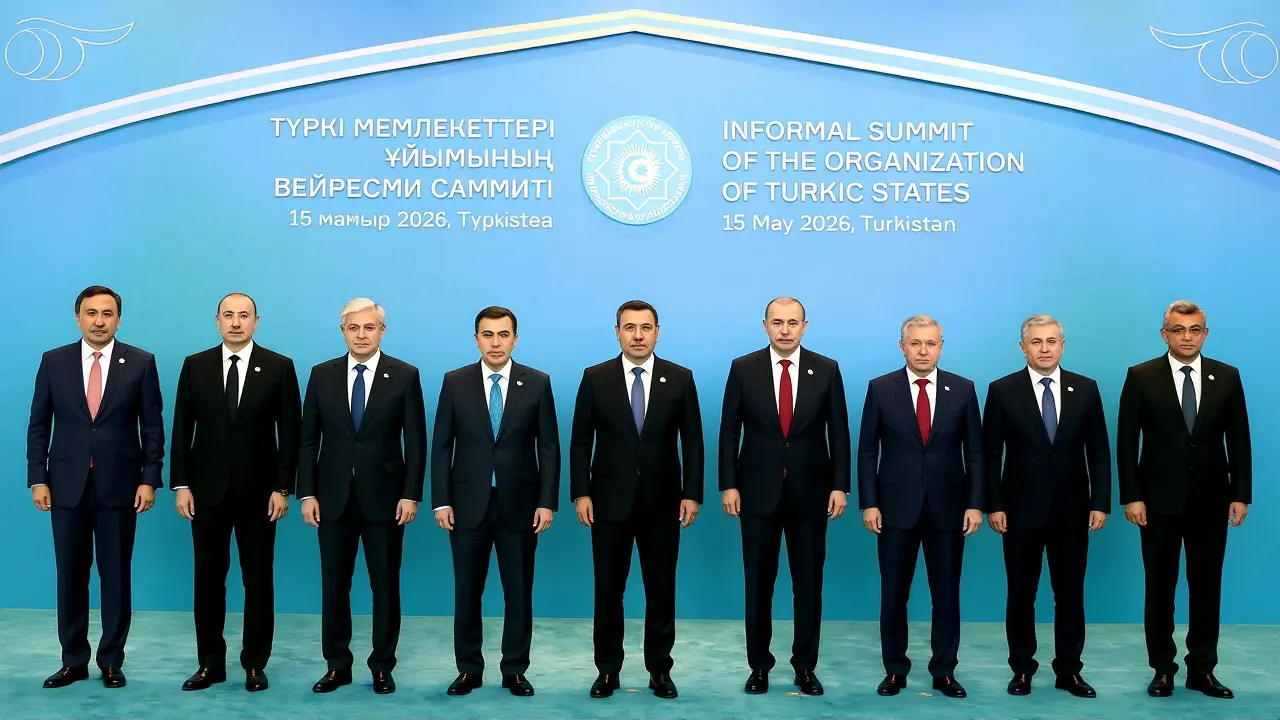
When Recep Tayyip Erdoğan, President of the Republic of Türkiye, took the stage in Kazakhstan this past Friday, he didn’t just offer polite pleasantries. He issued a stark warning: the Turkic world is under pressure from regional crises and digital threats, and unity isn't optional anymore—it's survival.
The remarks came during an informal summit of the Organization of Turkic States (OTS), held in Kazakhstan. While the exact date remains unconfirmed in initial reports, the timing underscores a shift in Ankara’s foreign policy focus. Erdoğan framed the gathering not merely as a cultural exchange but as a strategic necessity for shared security and prosperity across the region.
Beyond Rhetoric: The Security Imperative
Here’s the thing: Erdoğan’s message was less about nostalgia and more about immediate threat mitigation. He explicitly linked ongoing regional conflicts to the need for tighter political and strategic coordination among OTS members. In his view, the instability surrounding Central Asia and the broader Middle East creates a vacuum that only collective action can fill.
But wait—the twist isn't just traditional geopolitics. Erdoğan emphasized "emerging digital threats" as a critical vulnerability. This signals a modernization of the OTS’s mandate. We’re talking about cyberattacks, information warfare, and infrastructure vulnerabilities. By framing these as shared risks, Erdoğan is pushing member states like Azerbaijan, Kyrgyzstan, and Uzbekistan to align their cybersecurity protocols. It’s a logical extension of Turkey’s own robust digital sovereignty agenda.
Digital Integration and Cyber Defense
The Turkish President called for two specific, actionable pillars: digital integration and enhanced cyber defense. Daily Sabah, reporting from the event, noted that Erdoğan urged harmonization of digital infrastructures. Think cross-border data flows, unified digital services, and coordinated governance policies. Why? Because fragmented systems are easy targets for state-sponsored hackers.
Cyber defense takes center stage here. Erdoğan argued that protecting critical digital infrastructure must be a joint effort. Imagine a scenario where a cyberattack hits one member state’s power grid; under the current framework, the response might be isolated. Erdoğan wants a collective shield. This mirrors NATO’s Article 5 concept but tailored for the digital age within the Turkic sphere. It’s ambitious, sure, but given recent global cyber incidents, it’s hardly surprising.
Cultural Bonds: The Alphabet Initiative
Then there’s the cultural angle, which often gets overlooked in security discussions. Erdoğan advocated for "common alphabet initiatives." On paper, this sounds academic. In practice, it’s a powerful tool for soft power. Standardizing writing systems among Turkic languages facilitates easier communication, educational cooperation, and media exchange.
It’s a subtle way to deepen identity ties without forcing political uniformity. For decades, language barriers have hindered seamless trade and cultural interaction between Istanbul and Almaty or Baku. By promoting a common script—likely Latin-based, given Turkey’s influence—Erdoğan aims to remove friction. It’s not just about letters; it’s about creating a cohesive market and cultural bloc that can compete globally.
The Geopolitical Chessboard
Why now? The context matters. With Russia’s attention fixed on Ukraine and China expanding its Belt and Road initiatives, Central Asian states are looking for alternative partners. Turkey has been positioning itself as a bridge between Europe and Asia, offering a democratic, secular-leaning alternative to authoritarian models. The OTS serves as the institutional vehicle for this ambition.
Kazakhstan’s role as host is significant too. As the largest economy in the group, Kazakhstan’s buy-in is crucial. Hosting the summit signals Astana’s willingness to engage deeper with Ankara. But don’t expect instant miracles. Skeptics point out that historical tensions and competing interests with Moscow and Beijing still loom large. The details of implementation remain unclear, and no binding treaties were signed during this informal meeting.
What’s Next for the Turkic World?
The road ahead involves translating these high-level calls into concrete working groups. Expect new committees focused on cybersecurity standards and digital education. There may also be pilot projects for cross-border digital services. However, timelines are vague. Erdoğan spoke in broad strokes, emphasizing direction over deadlines.
Analysts suggest watching for bilateral agreements between Turkey and individual OTS members in the coming months. These smaller deals often pave the way for larger multilateral frameworks. If successful, this could reshape the economic and security landscape of Central Asia, reducing dependency on traditional powers and fostering a more integrated Turkic bloc.
Frequently Asked Questions
Who are the main members of the Organization of Turkic States?
The full members include Türkiye, Azerbaijan, Kazakhstan, Kyrgyzstan, and Uzbekistan. Observer states have included Hungary, Turkmenistan, and the Turkish Republic of Northern Cyprus at various times. The organization aims to foster cooperation among Turkic-speaking nations through cultural, economic, and political channels.
What does "digital integration" mean in this context?
Digital integration refers to harmonizing digital infrastructures and policies among OTS member states. This includes facilitating cross-border digital services, standardizing data protection laws, and coordinating responses to cyber threats. The goal is to create a seamless digital environment that boosts trade and security while reducing vulnerabilities to external attacks.
Why is Turkey pushing for a common alphabet initiative?
A common alphabet, likely based on the Latin script used in Turkey, aims to reduce linguistic barriers among Turkic peoples. This facilitates easier communication, educational exchange, and media collaboration. It strengthens cultural ties and creates a more unified identity, which can enhance political cohesion and economic cooperation within the OTS framework.
How does this affect regional security dynamics?
By strengthening ties among Turkic states, Turkey seeks to create a buffer zone against regional instability. Enhanced cyber defense and political coordination allow member states to respond collectively to threats, whether from neighboring conflicts or digital espionage. This reduces reliance on external powers like Russia or China, giving Central Asian nations more autonomy in their security policies.
Are there any immediate outcomes from the Kazakhstan summit?
As an informal summit, no binding treaties were signed. However, the meeting set the agenda for future cooperation. Expect follow-up technical meetings on cyber defense and digital infrastructure. Bilateral deals between Turkey and other members may emerge soon, serving as building blocks for broader multilateral agreements within the OTS structure.
Author
Ra'eesa Moosa
I am a journalist with a keen interest in covering the intricate details of daily events across Africa. My work focuses on delivering accurate and insightful news reports. Each day, I strive to bring light to the stories that shape our continent's narrative. My passion for digging deeper into issues helps in crafting stories that not only inform but also provoke thought.