
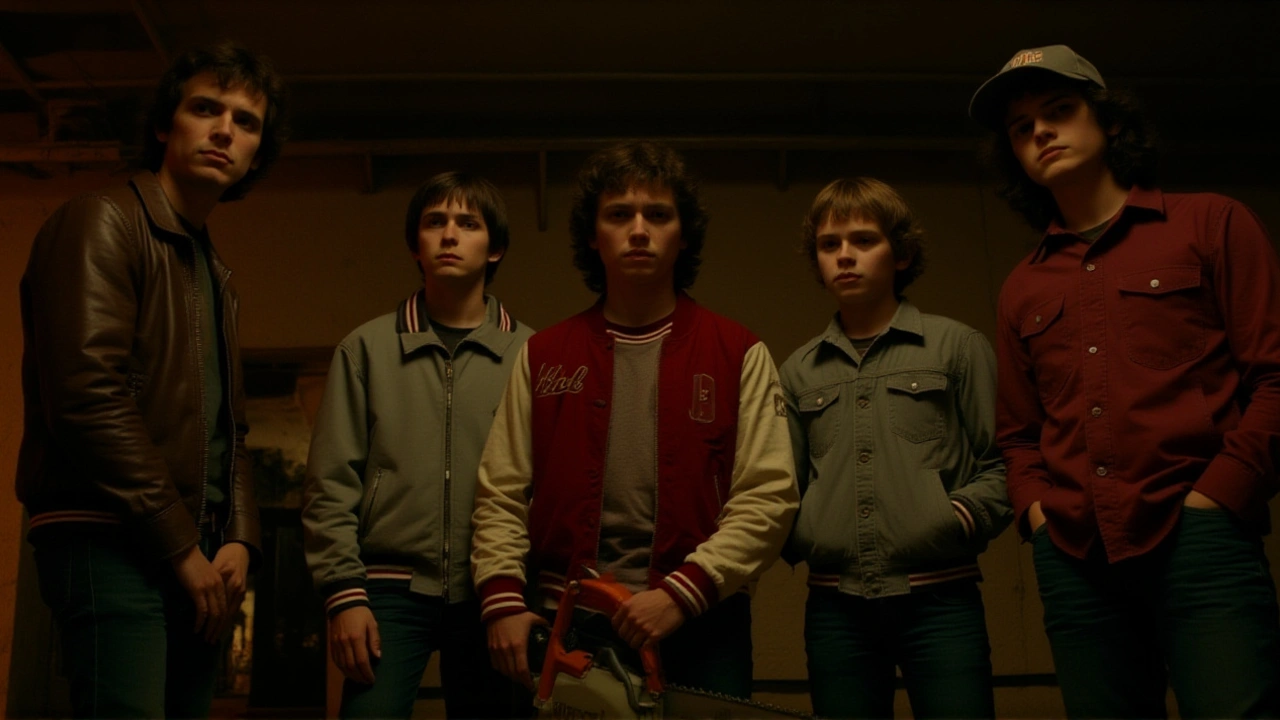
The most anticipated TV event in streaming history didn’t just break records—it broke Netflix. On November 26, 2025, at precisely 1:00 AM GMT, Stranger Things season five volume one dropped globally, triggering a cascade of system failures that left over two million subscribers stranded just as the Hawkins gang returned to the screen. Within minutes, Netflix, the streaming giant headquartered in Los Gatos, California, experienced its largest single-title outage ever, with Downdetector logging 14,000 user-reported outages in the first 24 hours. Fans in London, New York City, Sydney, and beyond watched their screens go dark as the show they’d waited eight years for became, for a time, unwatchable.
Why This Wasn’t Just a Technical Glitch
Netflix didn’t walk into this blind. Ross Frederick Duffer, co-creator of Stranger Things and executive producer through 21 Laps Entertainment, had publicly assured fans on November 24, 2025, that Netflix had "increased bandwidth by 30%" in anticipation. That wasn’t a marketing line—it was a $200 million infrastructure upgrade, according to internal sources. Kevin Lo, Netflix’s Vice President of Content Delivery, oversaw the rollout, relying on predictive models that forecasted 120 million views in the first 72 hours. The actual number? Over 150 million within four days, according to Ampere Analysis. The system didn’t fail because it was weak. It failed because the world showed up harder than anyone expected.
The Global Ripple Effect
The outage wasn’t random. It followed the sun. As it hit 8:00 PM EST in the U.S., the flood began. By 1:00 AM GMT in the UK, servers in London and Paris were buckling. In Sydney, where the show dropped at noon AEDT, fans were already halfway through episode one when the stream froze. Downdetector’s maps lit up like a Christmas tree across North America, Western Europe, and Australia. The highest concentration of crashes? Between 1:15 AM and 3:45 AM GMT—a three-hour window where time zones overlapped in perfect, chaotic harmony.
Approximately 0.8% of Netflix’s 260 million subscribers—roughly 2.08 million people—were affected. That might sound small, but consider this: when Bridgerton season two dropped in 2022, it generated 8,500 outage reports. Squid Game in 2021? 11,200. This? Four times that. And it wasn’t just buffering. People reported error codes, black screens, and entire apps crashing on smart TVs, phones, and gaming consoles.
How Fast Did Netflix Fix It?
Here’s the twist: they fixed it fast. By 5:18 AM GMT—just 92 minutes after the first wave of outages—99.7% of users had access again. Netflix’s Director of Global Communications, Maureen Beqiri, issued a terse but sincere apology: "We experienced higher than anticipated demand... Our teams have resolved the issue and the show is now available globally." No excuses. No blame. Just a quiet acknowledgment that the fanbase had outgrown the infrastructure.
What’s more impressive? The outage didn’t spark outrage. It sparked memes. Twitter exploded with screenshots of error messages next to "I just watched Eleven save the world... but Netflix couldn’t save my stream." Reddit threads turned into fan forums celebrating the chaos. "This isn’t a failure," one user wrote. "It’s a love letter. They built a system for 100 million. We showed up with 150 million. That’s the win."
What Comes Next? The Final Act
The story isn’t over. Volume two—episodes five through seven—is scheduled for December 26, 2025, at the same global time: 1:00 AM GMT. Volume three, the final episode, lands on January 1, 2026. Analysts expect even higher demand, especially with the emotional weight of the finale. Netflix has reportedly already doubled its regional content delivery nodes in Europe and Asia, and is testing a new "demand-based throttling" algorithm that prioritizes bandwidth based on real-time viewer density.
Meanwhile, the cultural impact continues to grow. Stranger Things has generated over $1.2 billion in merchandise since its 2016 debut. Its influence stretches from Halloween costumes to college thesis papers on 1980s nostalgia in digital media. It’s not just a show. It’s a shared experience—and this outage proved just how deeply it’s woven into the fabric of global pop culture.

Industry Reckoning
"This isn’t a Netflix problem," said Robert Stephens, founder of Downdetector. "It’s the new reality. When a show becomes a cultural event, the infrastructure has to become a national utility. We’re not just streaming video anymore. We’re streaming collective emotion. And that’s harder to scale than bandwidth."
Other platforms are watching closely. Disney+, Amazon Prime, and Apple TV+ are already reviewing their own peak-load protocols. The message is clear: in the age of binge culture, tentpole releases aren’t just marketing events—they’re infrastructure emergencies waiting to happen.
Frequently Asked Questions
How many people were affected by the Netflix outage during Stranger Things season five’s premiere?
Approximately 2.08 million of Netflix’s 260 million global subscribers experienced service disruptions during the premiere window. This represents about 0.8% of the total user base, making it the largest single-title outage in Netflix’s history—surpassing previous records set by Bridgerton and Squid Game.
Why did Netflix’s 30% bandwidth increase still fail to prevent the crash?
Netflix’s infrastructure team projected 120 million views within 72 hours, but actual demand surged past 150 million in just four days. The 30% bandwidth boost was based on historical data, not the unprecedented global fandom that turned the premiere into a real-time cultural moment. The system was optimized for scale, not for this level of synchronized, worldwide urgency.
What’s the timeline for the rest of Stranger Things season five?
Volume two (episodes five through seven) drops on December 26, 2025, at 1:00 AM GMT. Volume three, the final episode, arrives on January 1, 2026, at the same global time. Netflix has confirmed it will use lessons from the first outage to preemptively scale infrastructure, especially in high-demand regions like North America, Western Europe, and Southeast Asia.
Is this the first time a TV show has crashed a streaming service?
No—but it’s the most severe. Previous incidents include the premiere of Squid Game in 2021 (11,200 outage reports) and Bridgerton season two in 2022 (8,500 reports). This event, with 14,000 reports in 24 hours, is the highest ever recorded for a single title. It’s the first time a show’s popularity has overwhelmed Netflix’s entire global delivery network simultaneously across three continents.
What does this mean for other streaming services like Disney+ or Amazon Prime?
They’re reevaluating their launch strategies. If a single show can crash Netflix—despite its $30 billion infrastructure budget—then no platform is immune. Expect more staggered rollouts, regional load balancing, and AI-driven traffic prediction models. The era of "all episodes at once" may be ending, not because of creative reasons, but because the tech can’t keep up with fan passion.
Why is Stranger Things considered Netflix’s most successful original series?
Beyond its 1.8 billion hours viewed across four seasons, Stranger Things has generated over $1.2 billion in merchandise, inspired spin-offs, and became a global language for 1980s nostalgia. It’s the only Netflix original to spawn real-world fan events, themed attractions, and academic analysis. Its cultural footprint exceeds its viewership numbers, making it more than a show—it’s a phenomenon.


Author
Ra'eesa Moosa
I am a journalist with a keen interest in covering the intricate details of daily events across Africa. My work focuses on delivering accurate and insightful news reports. Each day, I strive to bring light to the stories that shape our continent's narrative. My passion for digging deeper into issues helps in crafting stories that not only inform but also provoke thought.