
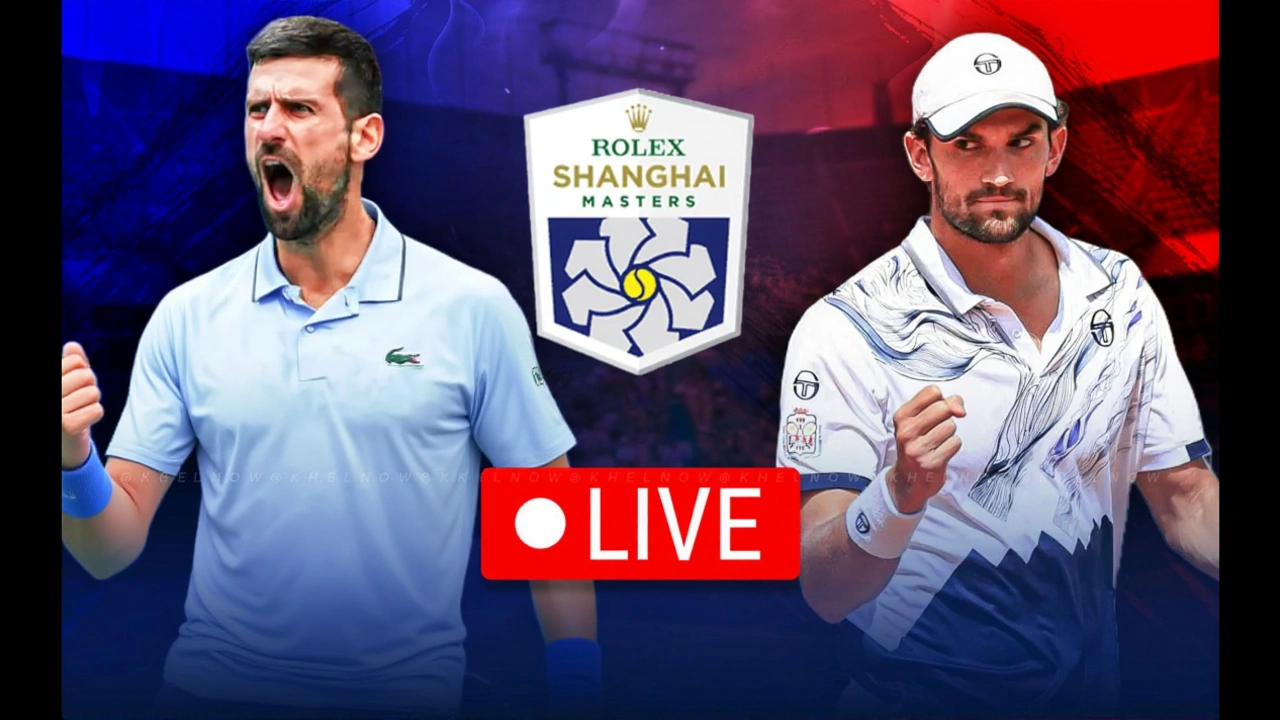
When Valentin Vacherot knocked out Novak Djokovic in the semi‑final of the Shanghai MastersQizhong Forest Sports City Arena, the tennis world got a double‑take. The Monegasque underdog, who entered the week with just one ATP Tour win and $594,077 in career earnings, suddenly found himself set to face his own cousin, Frenchman Arthur Rinderknech, in what the ATP Tour called an “undreamable dream.” The showdown, scheduled for Sunday, October 12 at 4:30 AM ET, has instantly become the headline of the Asian swing’s grand finale.
Background: The Shanghai Masters and the Asian Swing
The ATP Tour classifies the Shanghai event as the only ATP Masters 1000 tournament in Asia, marking the climax of a two‑week “Asian swing” that follows the US Open. Held at the iconic Qizhong Forest Sports City Arena in Shanghai, China, the 2025 edition ran from October 1‑12, with qualifying matches opening on September 29. The tournament offered a total prize pool of $9.5 million, paying the champion $1,124,380 and the runner‑up $597,890 – a life‑changing sum for players outside the top 30.
Top seeds such as Jannik Sinner and Alexander Zverev were present, while defending champion Carlos Alcaraz withdrew after an ankle twist in Japan. Even retired great Roger Federer made a special appearance on October 10, a reminder of the event’s high‑profile status.
Vacherot’s Fairy‑Tale Run
Born in Monte‑Carlo, Valentin Vacherot entered Shanghai as a qualifier ranked just inside the top 180. He survived three qualifying rounds, then dispatched a series of higher‑ranked opponents – first beating world No. 27 Lorenzo Musetti in straight sets, followed by a gritty three‑set win over the experienced Miomir Kecmanović. Each victory nudged his earnings past the $600,000 mark, an achievement that would have seemed impossible just a month earlier.
The semi‑final against Djokovic was billed as a classic David‑vs‑Goliath story. Vacherot, playing left‑handed with his trademark flat forehand, took the first set 6‑4. Djokovic, visibly hampered by a lingering hamstring issue that the ATP later described as “physical struggles,” tried to rally but fell behind 3‑0 in the second set before the Monegasque held serve to seal a 6‑3, 6‑2 victory. In the post‑match press conference, Vacherot’s smile was unmistakable: “I never imagined I’d be here, let alone beating a legend. It feels surreal.”
Djokovic’s Uncharacteristic Exit
For the Serbian star, the loss was a rare blip in an otherwise dominant season. Djokovic entered Shanghai with 1,210 career titles and a recent streak of 24 straight match wins. After the semi‑final, he addressed reporters with understated grace: “All about him,” he said, pointing to Vacherot. “He’s the one who deserves the spotlight today.” The statement, captured in the ATP’s official release, quickly went viral, reinforcing Djokovic’s reputation as a consummate professional.
Analysts noted that the hamstring issue had been brewing since his quarter‑final clash with Hubert Hurkacz, where he limped through a three‑set win. Sports physiologist Dr. Lena Hoffmann explained, “A tight hamstring can compromise service speed and lateral movement – two pillars of Djokovic’s game. It’s not surprising he struggled to finish the match.”
The Cousins’ Clash: What’s at Stake?
While Vacherot is set to collect at least $597,890 for reaching the final – already eclipsing his career total – Rinderknech stands to earn $332,160 as the runner‑up if he falls short, or $1,124,380 if he pulls off the upset. The financial disparity alone adds a layer of drama, but the emotional stakes are higher. The two cousins grew up training together in Paris, often sparring on the same clay courts. Arthur Rinderknech recalled, “When we were kids, I’d always imagine beating Valentin in a big match. To actually be here, it’s a childhood fantasy turned reality.”
The final will be played on the famed “hard‑court bowl” of the Qizhong arena, a venue known for its retractable roof and thunderous crowd. Ticket sales, which opened on July 21, sold out within days, especially after Klook’s travel guide highlighted Federer’s appearance and the historic cousin final.
Reactions, Experts, and What’s Next
Social media lit up with #VacherotVsRinderknech trending across Twitter and Weibo. Fans posted memes dubbing the match “the ultimate family feud.” Former world No. 1 Andy Murray weighed in on ESPN, saying, “It’s a reminder that on any given day, an underdog can write a new chapter. I’ll be watching with a popcorn bowl.”
From a rankings perspective, the winner will collect 1,000 ATP points, catapulting them into the top 30 for the first time. The runner‑up receives 600 points, enough to solidify a spot inside the top 50. Both players will also secure direct entries into the 2026 Australian Open main draw, an added incentive.
Looking ahead, the ATP will shift focus to the season‑ending Finals in Turin. For Vacherot, a title would not only be his career breakthrough but also a ticket to that elite eight‑player showdown. For Rinderknech, a victory would cement his status as a rising French star, potentially earning a spot in the French Davis Cup team for next year.
Frequently Asked Questions
How does Vacherot’s potential win affect his career earnings?
If Vacherot captures the title, the $1,124,380 prize alone will more than double his pre‑tournament career earnings of $594,077, propelling him into the $1.7 million‑plus bracket and securing financial stability for the next season.
What are the key factors behind Djokovic’s loss?
Medical reports cited a strained hamstring that limited his serve velocity and court coverage. Combined with Vacherot’s aggressive baseline play, the injury prevented Djokovic from executing his usual defensive wizardry.
When and where will the final be played?
The championship match is set for Sunday, October 12, 2025, at 4:30 AM Eastern Time (17:30 CST) inside the Qizhong Forest Sports City Arena in Shanghai, China.
How will the result impact ATP rankings?
The champion earns 1,000 ranking points, likely moving them into the world’s top 30. The runner‑up receives 600 points, securing a spot inside the top 50 and guaranteeing direct entry into next year’s Grand Slam draws.
What does this final mean for French tennis?
Rinderknech’s presence spotlights the depth of French men’s tennis after the era of Tsonga and Monfils. A victory would add momentum heading into the Paris Masters and could influence French Davis Cup selections for 2026.


Author
Ra'eesa Moosa
I am a journalist with a keen interest in covering the intricate details of daily events across Africa. My work focuses on delivering accurate and insightful news reports. Each day, I strive to bring light to the stories that shape our continent's narrative. My passion for digging deeper into issues helps in crafting stories that not only inform but also provoke thought.