
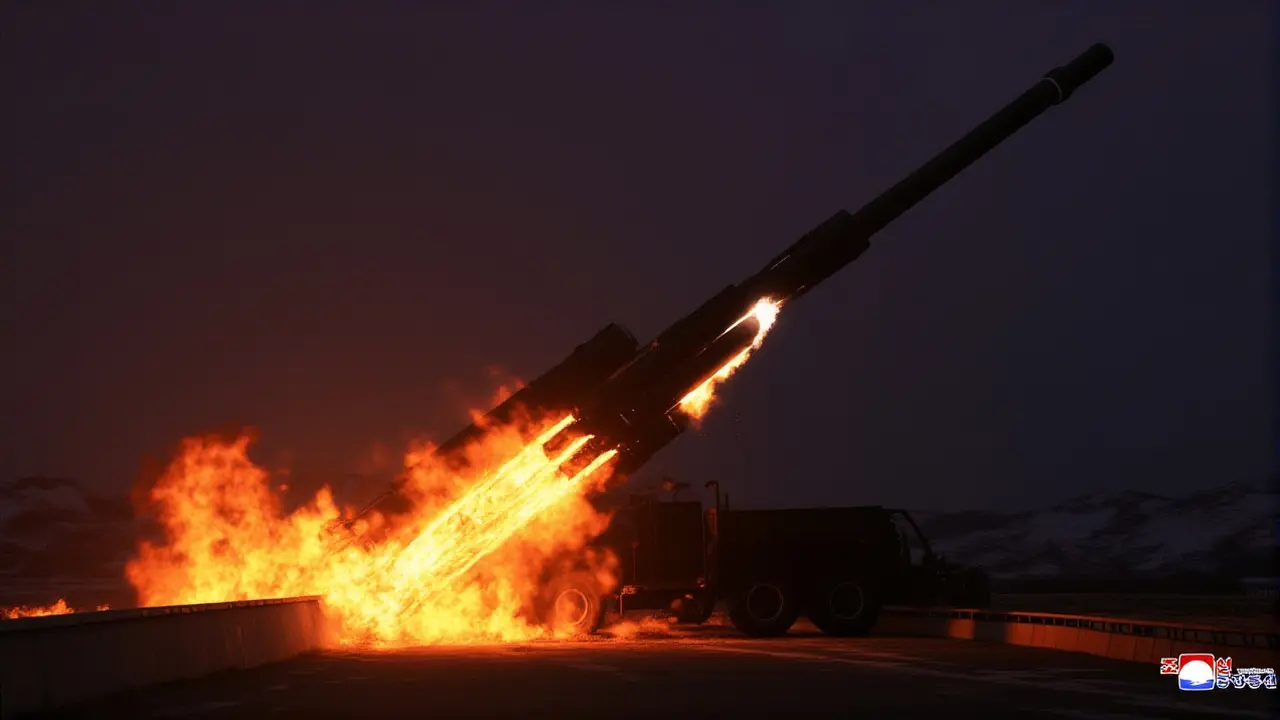
In a bold show of force, North Korea launched approximately ten ballistic missiles into the East Sea on March 14, 2026. The barrage coincided directly with ongoing joint military exercises between the United States and South Korea, signaling a clear message of defiance to the allied forces. This latest provocation comes at a particularly sensitive time, following high-level diplomatic whispers about a potential return to the negotiating table.
Here's the thing: this isn't just another routine test. The timing is pointed. Just days before the launches, Kim Min-seok, the Prime Minister of South Korea, held discussions with Donald Trump. According to reports from the Yonhap news agency, those talks touched on the possibility of resuming nuclear negotiations with Pyongyang—a move that Trump reportedly supports. It seems the North is using these missiles to ensure they enter any future talks from a position of absolute strength.
But wait, this isn't an isolated incident. The early months of 2026 have been restless. On January 4, 2026, Pyongyang fired multiple missiles into the East Sea to kick off the year. This followed a brief lull in activity that lasted from May through early October 2025. However, the peace didn't last long; around October 22, 2025, short-range missiles were fired from the Junghwa area, striking targets roughly 350 kilometers away. Turns out, North Korea has been busy building a new missile base in Junghwa, which has become a favorite spot for their recent exercises.
A Shift in Strategy and Testing Grounds
Looking at the big picture, North Korea's approach to missile testing has shifted dramatically. According to the James Martin Center for Nonproliferation Studies, the pattern since 2014 has evolved from sporadic tests to a high-frequency regime. They've moved away from the old-school methods of the past.
Back in 1984, the Tonghae Satellite Launching Ground near Musudan-ri was the place to be. It was the primary hub for the first generation of missiles. But under the rule of Kim Jong Il, only three rockets—all space launches in 1998, 2006, and 2009—actually took off from there. Most others were fired from the Wonsan area. Today, while Wonsan remains a hub, the regime is diversifying. For example, the KN-11 submarine-launched ballistic missiles (SLBMs) are typically tested near the shipyards at Sinpo.
The Evolution of the Hwasong Arsenal
The real worry for global security is the sheer range these weapons have acquired. The progression has been steady and terrifying. On May 14, 2017, the Hwasong-12 intermediate-range missile flew 789 kilometers, reaching an altitude of 2,111.5 kilometers. Experts noted that such a missile could easily reach Guam with a range of 4,000 to 6,000 kilometers.
Then came the big leap. On July 4, 2017, North Korea debuted the Hwasong-14 ICBM. Launched from the Panghyon Aircraft Factory, it soared 2,500 kilometers into space. While it landed in Japan's exclusive economic zone, the data suggested it could hit Alaska, Hawaii, or even Seattle if aimed on a flatter trajectory. By July 28, 2017, another ICBM from Chagang Province put cities like Los Angeles, Chicago, and New York City firmly within the strike zone.
The Hwasong-15, tested on November 28, 2017, pushed the envelope even further. It reached a staggering 4,500 kilometers in height and a potential range of 13,000 kilometers. This means virtually every corner of the continental United States and Australia is now a potential target. Interestingly, satellite imagery suggests the regime may now be able to fuel these missiles horizontally, which would significantly slash the time between when a missile is spotted and when it's actually launched. That's a nightmare scenario for early warning systems.
Railway Mobility and Nuclear Synergy
It's not just about how far they can go, but how they get there. On January 15, 2022, the regime tested two Hwasong-11A (KN-23) missiles from trains. These railway-borne launches reached speeds of Mach 6, hitting targets 430 kilometers away. This mobility makes the missiles much harder to track and destroy in a preemptive strike.
The most dangerous element, however, is the payload. Following their sixth and most powerful nuclear test in September 2017, where they claimed to have developed a thermonuclear bomb, U.S. intelligence agencies concluded that North Korea can now miniaturize nuclear warheads to fit inside these missiles. The danger isn't theoretical anymore; it's operational. In late 2023, the stakes grew even higher when Russia began utilizing North Korean Hwasong-11A missiles in the conflict in Ukraine.
What Happens Next?
With ten missiles in the air on March 14, Pyongyang is clearly signaling that any diplomatic overtures must be met with concessions. The U.S. and South Korea are now in a tight spot: do they ignore the provocation to keep the peace talks alive, or do they respond with increased military pressure? The details of any upcoming negotiations remain unclear, but the message from the East Sea was loud and clear.
Frequently Asked Questions
Why did North Korea launch missiles on March 14, 2026?
The launches served as a direct response to joint U.S.-South Korean military drills and occurred shortly after reports that Prime Minister Kim Min-seok and Donald Trump discussed resuming nuclear negotiations. It is widely viewed as a tactic to gain leverage before any potential diplomatic talks.
Which missiles are capable of reaching the United States?
The Hwasong-14 and Hwasong-15 ICBMs are the primary threats. The Hwasong-15, in particular, has a potential range of 13,000 kilometers, which puts the entire continental U.S. and parts of Australia within its strike capability.
What is the significance of railway-borne missile launches?
Launching from trains, as seen with the Hwasong-11A in January 2022, allows North Korea to move its assets quickly and unpredictably. This increases survivability by making it much harder for enemy intelligence to locate and target the missiles before they are fired.
How has North Korea's testing pattern changed since 2014?
According to the James Martin Center for Nonproliferation Studies, the regime has shifted from infrequent, centralized testing to much more frequent launches from a variety of new and mobile locations, including shipyards and railway systems, increasing their operational flexibility.
Is there a connection between North Korean missiles and the war in Ukraine?
Yes. In late 2023, it was reported that Russia began using North Korean ballistic missiles, specifically the Hwasong-11A, in its military operations against Ukraine, marking a significant expansion of the regime's influence and cooperation with Moscow.


Author
Ra'eesa Moosa
I am a journalist with a keen interest in covering the intricate details of daily events across Africa. My work focuses on delivering accurate and insightful news reports. Each day, I strive to bring light to the stories that shape our continent's narrative. My passion for digging deeper into issues helps in crafting stories that not only inform but also provoke thought.