
Electricity Blackouts
When the lights go out and your phone starts dying, you’re not just dealing with an inconvenience—you’re facing the reality of electricity blackouts, sudden, unplanned power failures that disrupt homes, businesses, and entire cities. Also known as load shedding, these outages aren’t random glitches. They’re the symptom of a broken system, one that’s been ignored for decades and is now collapsing under demand, mismanagement, and aging infrastructure. In places like South Africa, where blackouts last 10 hours a day or more, people have learned to live with them. But that doesn’t mean they’ve accepted them. Every time the power drops, it’s a reminder that basic services—water pumps, hospitals, schools—are on life support.
These blackouts aren’t just happening in one country. They’re spreading. In Madagascar, protests erupted after the elite CAPSAT unit seized Antananarivo, not over politics, but because the lights hadn’t been on for days. In Kenya, businesses are switching to solar just to stay open. In Nigeria, factories are shutting down because the grid can’t hold a steady current. This isn’t a local issue—it’s a continent-wide energy crisis, a systemic failure of power generation, distribution, and maintenance across African nations. And it’s tied directly to another entity: the power grid, the network of transmission lines, substations, and transformers that deliver electricity from power plants to homes. Most African grids were built in the 1970s and haven’t been upgraded. They can’t handle modern demand, and when one part fails, the whole system crashes.
Why This Keeps Happening
It’s not just about lack of investment. It’s about corruption, poor planning, and political neglect. In South Africa, Eskom’s debt has hit R400 billion. Maintenance is skipped. Coal plants break down. Workers are underpaid. Meanwhile, renewable energy projects are stalled by red tape. In Ghana, diesel generators are common, but fuel prices spike when global oil moves. In Zimbabwe, the grid is so unreliable that people charge their phones at gas stations. This isn’t the future. This is today.
What you’ll find here aren’t just news reports. These are real stories—from families without fridge power during a heatwave, to clinics running on batteries during surgeries, to entrepreneurs who built entire businesses around solar panels because the grid failed them too many times. These posts show how electricity blackouts are reshaping economies, forcing innovation, and turning everyday people into problem-solvers. You’ll see how a single power cut in Cape Town can ripple into a missed school exam, a failed business deal, or a delayed emergency response. And you’ll see how communities are fighting back—not waiting for government fixes, but building their own solutions, one solar panel at a time.
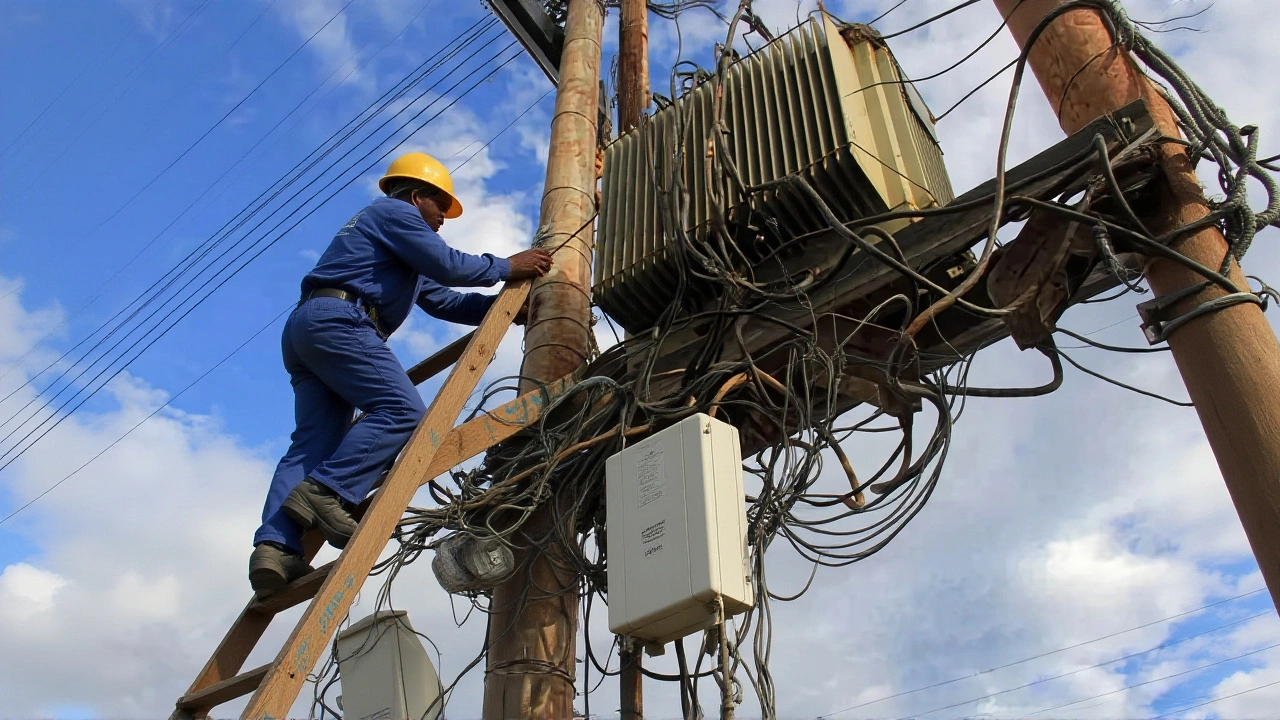
Kenya Power to Pay Customers for Blackouts Under New 2025 Energy Rules
Dec 3, 2025, Posted by Ra'eesa Moosa
Kenya Power must now compensate customers for blackouts under new 2025 regulations from EPRA, with industrial users potentially receiving hundreds of thousands of shillings per outage, addressing chronic 9.15-hour monthly power failures.
MORE